
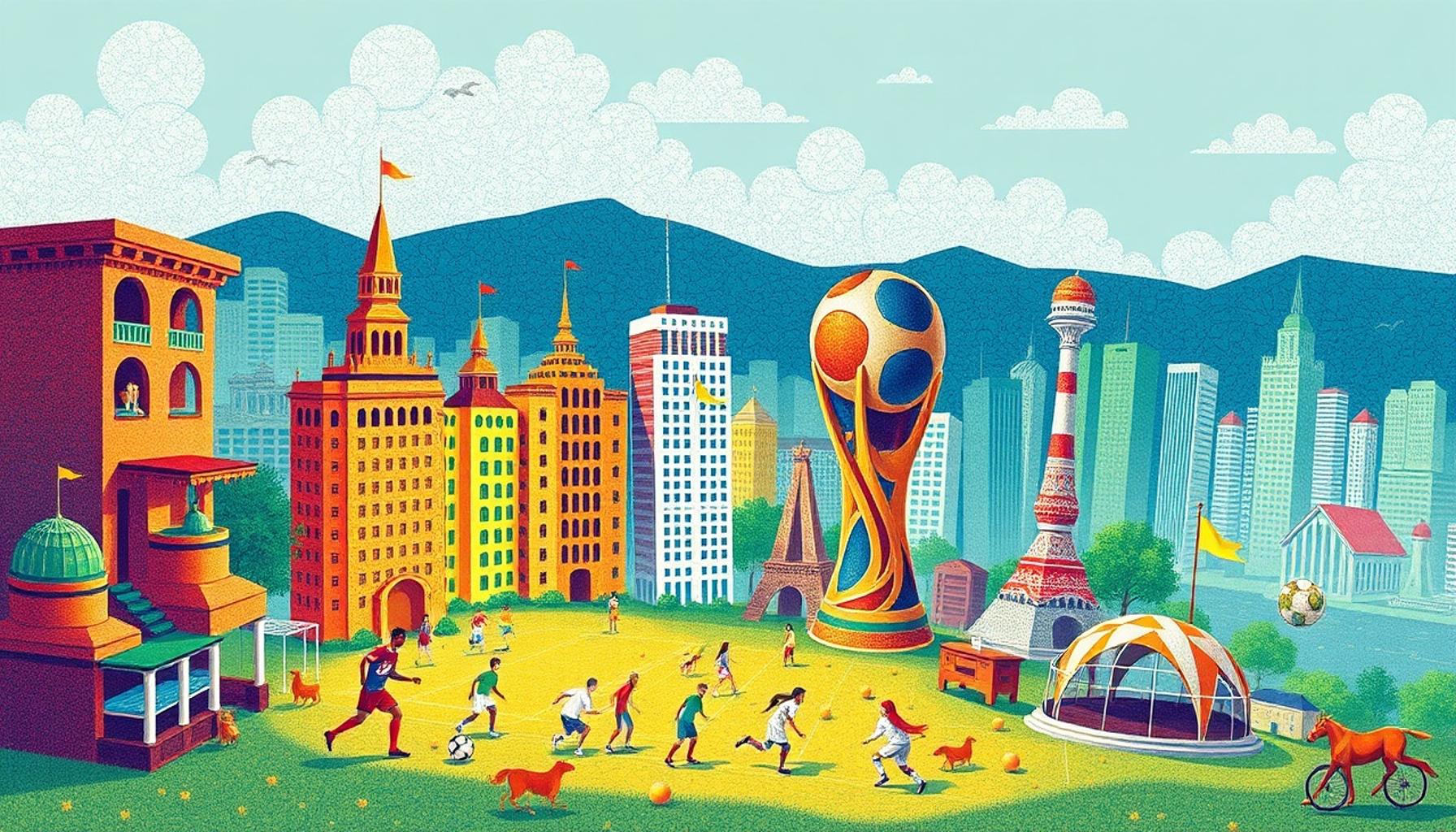
The anticipation surrounding the 2026 World Cup is electric, marking a significant moment in sports history. For the first time, this prestigious tournament will be jointly hosted by three nations: the United States, Canada, and Mexico. This unprecedented collaboration is not just a logistical marvel; it also reflects the rich and diverse cultures connected through the sport of football. As we explore the host cities, we uncover their unique contributions to the evolution of football in North America, along with the profound impact the sport has had on local communities.
Host Cities and Their Football Legacy
Each city selected for the tournament is steeped in football history, with passionate fanbases and vibrant traditions that highlight the sport’s significance in their regions. Let’s delve into these notable cities and their unique football narratives:
- Los Angeles: Known for its iconic stadiums like the SoFi Stadium and the historic Rose Bowl, Los Angeles is a melting pot of football influences. The city’s diverse population contributes to a rich array of international football cultures, with fans passionately supporting teams from various countries. Notably, the LA Galaxy and LAFC have fostered intense rivalries in Major League Soccer, epitomizing the city’s deep connections to the sport.
- New York City: As the birthplace of numerous football clubs, including the famed New York Cosmos of the NASL era, NYC has long been a hub for international matches and events. The city boasts a vibrant football culture, with supporters constantly rallying around teams like New York City FC and the New York Red Bulls. Its storied parks and neighborhoods often serve as informal pitches where the local community engages with the game, further enriching its football tapestry.
- Miami: With its multicultural environment, Miami reflects the diversity of global football fanbases. The city’s passion for the sport is evident during match days, where the excitement transcends nationalities, bringing various communities together. The recent establishment of Inter Miami CF has reignited local enthusiasm, drawing in fans who celebrate their heritage while embracing the beauty of the game.
- Toronto: Known for its devoted supporters and a flourishing Major League Soccer scene, Toronto has become a formidable force in North America. The Toronto FC has energized the city’s football culture, amassing a dedicated following that often fills BMO Field with unwavering support. Furthermore, the city has hosted several international tournaments, solidifying its status as a key player in the football landscape.
These cities have each played a crucial role in shaping the narrative of football in their regions. The stories of famous legends, fierce rivalries, unforgettable match-day atmospheres, and community bonding vividly illustrate the deep-rooted connection between football and cultural identity. As we approach the 2026 World Cup, understanding these cities’ historical significance not only enhances our appreciation for the tournament but also illustrates how football continues to unite millions across borders and cultures. The countdown has begun, and the world’s eyes are set on North America—a celebration of the beautiful game like never before.
Exploring the Historic Ties of Football in the Host Cities
The journey of football in the host cities of the 2026 World Cup is a captivating narrative woven through decades of cultural exchange, community engagement, and competitive spirit. As the tournament approaches, it’s essential to appreciate the local histories that have transformed these metropolises into passionate football hubs. With each city contributing a unique flavor to the American game, let’s explore how football has evolved within these urban landscapes.
Los Angeles, a city synonymous with entertainment, has also emerged as a hotspot for football clubs. The LA Galaxy, one of Major League Soccer’s cornerstone franchises, has been instrumental in popularizing the sport in the area since its inception in 1996. The team’s ability to attract international stars, including David Beckham, has not only elevated its status but also galvanized fan involvement. Beside the Galaxy, the newer LAFC has brought fresh energy and a passionate local following to the scene, intensifying the city’s football rivalry. The iconic stadiums of LA—SoFi Stadium and the historic Rose Bowl—serve as testimonies to the city’s commitment to hosting crucial football events and developing grassroots talent.
Meanwhile, New York City offers a narrative steeped in tradition. As the birthplace of foundational clubs such as the New York Cosmos, which played a pivotal role during the NASL era in the 1970s and 1980s, the city’s relationship with football runs deep. The Cosmos, with their star-studded roster, captivated local audiences and forged a legacy that resonates to this day. Presently, clubs like New York City FC and New York Red Bulls continue to build a vibrant football culture, where urban spaces transform into fields of hope and dreams for aspiring young players on weekends. Additionally, the city’s parks hum with life as diverse communities gather to hone their skills, reinforcing football’s role as a unifier of people from different backgrounds.
Miami is another city bursting with football enthusiasm, characterized by its multicultural landscape. Home to the newly formed Inter Miami CF, the city has successfully rekindled a love for the game, appealing to fans from various backgrounds, especially those with Caribbean and Latin American ties. Match days at DRV PNK Stadium reflect the city’s unique cultural tapestry, transcending boundaries and showcasing a bevy of flags and chants that express admiration for their respective heritage. Miami’s football scene, while relatively young compared to some, is dynamic and reflective of the city’s ethos—fusion and celebration of culture.
On the Canadian side, Toronto showcases a firmly established football narrative within Major League Soccer. The supporters of Toronto FC are known for their remarkable loyalty, often filling BMO Field to its capacity during match days. The passion extends beyond the stadium, as TFC’s success and community outreach programs contribute to a burgeoning youth soccer movement across the Greater Toronto Area. The city has earned a reputation as a pivotal player on the North American soccer stage, having not only hosted international matches but also playing a significant role in elevating the game’s profile across the continent.
As the 2026 World Cup draws nearer, it becomes evident that the host cities are much more than mere venues—they are vital parts of the football legacy. These rich stories of local significance and cultural pride intertwine to form the vibrant tapestry of football in North America, reminding us that the beautiful game is about more than just competition; it embodies community, identity, and togetherness.
The History of Football in the Host Cities of the 2026 World Cup
As we delve deeper into the significant cities that will host the 2026 World Cup, it’s important to recognize the rich footballing heritage that each location brings to the tournament. Uniting North America—Canada, the USA, and Mexico—this event is poised to showcase not only competitive football but also the diverse cultures and traditions inherent in each city. The three nations have passionately embraced football, resulting in local leagues, community support, and a devotion that permeates through generations.
Host City Highlights
Each host city has its unique story, embodying a legacy that dates back decades. For instance, cities like Mexico City are steeped in football history, housing legendary clubs and monumental matches. In the United States, cities such as Los Angeles have become hotbeds for both domestic and international talent, highlighted by memorable events like the 1994 World Cup. Canada’s growing football scene also signals a maturing landscape, as cities like Toronto welcome a surge of multicultural influences shaping the sport.
Furthermore, with cities such as Seattle and Vancouver building a solid foundation for football, the 2026 World Cup will not only celebrate the past but also pave the way for future generations of players and fans. As the tournament approaches, these cities are gearing up to not only welcome guests but to immerse them in a vivid tapestry of football history.
| City | Football Legacy |
|---|---|
| Mexico City | Home of historic clubs, two-time World Cup host, and cultural football hub. |
| Los Angeles | Major MLS market with rich international diversity and passionate fan base. |
| Toronto | Emerging football scene with strong local leagues and multicultural participation. |
This journey through the history of these cities not only underscores their contribution to football’s evolution but also hints at the exciting narratives that will unfold during the 2026 World Cup. Each city’s unique charm complements the universal love for the beautiful game, promising an unforgettable experience for players and fans alike.
Modern Growth and Community Impact in Football Culture
The evolution of football in the host cities for the 2026 World Cup reveals not only a rich historical context but also a dynamic present that embraces youth engagement and diverse representation. Cities such as Seattle and Vancouver have become pivotal to this narrative, and they demonstrate how football has transcended mere sport to become a central part of community identity.
In Seattle, the arrival of the Seattle Sounders FC in Major League Soccer has solidified the city’s reputation as a football powerhouse. Since their debut in the MLS in 2009, the Sounders have consistently ranked among the league’s best in attendance, showcasing the city’s passion for the game. Home matches at Lumen Field are characterized by electrifying atmospheres, vibrant fan culture, and community festivities, underscoring the team’s commitment to inclusivity. Seattle’s emphasis on youth programs, particularly through initiatives like the Sounders Youth Academy, has not only nurtured local talent but also significantly increased the participation of underrepresented communities in the sport.
Moreover, Vancouver contributes its distinct narrative through the Vancouver Whitecaps FC, a team with historical roots going back to the 1970s. The Whitecaps continue to bolster football’s presence in Canada, playing a crucial role in elevating the status of the sport nationwide. Their home at BC Place is not just a venue for matches but a community gathering space, promoting events like the annual Roberto Luongo Charity Soccer Game which fosters interactions between sports stars and fans. Vancouver’s initiative to introduce football in schools has sparked interest in the sport among young Canadians, thereby creating future generations of players and supporters.
As we turn our attention to Philadelphia, we find a city rich in sports tradition, and its football history is no exception. The Philadelphia Union’s establishment in 2010 represented a significant moment in the city’s sports landscape. The team’s strong connection with the local community has helped to elevate interest in soccer through family-friendly events, youth clinics, and engagement with schools. The Union’s fans, known for their passionate support, have transformed Subaru Park into a cauldron of enthusiasm that rivals more established sports like American football and basketball. The city’s dedication to grassroots initiatives further highlights football’s capacity to unite diverse communities.
As we shift focus to Dallas, soccer has emerged as a key player in the local sports scene, largely due to FC Dallas, founded in 1996. The club has made a commitment to nurturing youth talent, benefiting from a strong Academy system that has produced several professional players who have gone on to play both nationally and internationally. The flourishing youth programs have fostered an environment where the sport thrives, creating opportunities for hundreds of children to participate in organized soccer leagues and clinics. Dallas’s multicultural heritage is also reflected on the pitch, as numerous international players have graced the field, enriching the football scene with diverse playing styles and cultural backgrounds.
This narrative is echoed in San Francisco and its surrounding Bay Area, where soccer has traditionally held a strong presence despite not featuring a prominent MLS team until recently. Local clubs and youth teams flourish, with historical entities like the San Jose Earthquakes laying the groundwork for soccer’s growth in the region. Their strong ties to the community through outreach and educational programs demonstrate football’s role as a bridge between multiple cultures and generations.
With the 2026 World Cup on the horizon, it is clear that the host cities share a mutual goal: to foster future talent, promote diversity, and solidify their legacies as key pillars of football culture in North America. Each city’s stories contribute significantly to a collective narrative that elevates the beautiful game within diverse communities, ensuring a vibrant future for soccer across the continent.
Conclusion: A Legacy of Passion and Unity in Football
The history of football in the host cities of the 2026 World Cup encapsulates an inspiring journey marked by growth, community engagement, and cultural diversity. Cities like Seattle, Vancouver, Philadelphia, Dallas, and the Bay Area showcase how the sport has evolved from its nascent stages to a vibrant element of their identities. Each city has embraced the beautiful game, fostering local talent and nurturing the next generation of players through substantial youth initiatives and educational programs.
As the countdown to the World Cup continues, it is evident that these host cities have laid a solid foundation for football’s increasing popularity in North America. The electric atmospheres witnessed during matches, from the passionate Sounders supporters to the dedicated Union fans at Subaru Park, illustrate the profound impact football has on gathering communities. Furthermore, the rich histories and traditions intertwined with each team and club reinforce the sport’s role as a unifying force among people from diverse backgrounds.
Looking ahead, the 2026 World Cup presents an unparalleled opportunity not only to celebrate football but also to further enhance these cities’ legacies as epicenters of the sport. As fans, budding athletes, and communities prepare for this monumental event, the essence of football—as a catalyst for inclusivity, camaraderie, and passion—will continue to thrive. This outlook not only sets the stage for an unforgettable tournament but also shapes the future of football in North America, encouraging exploration and appreciation of its rich history.